The Netherlands is a small country with a big scientific footprint. Its land is flat, crowded and partly below sea level, yet it has produced Nobel prize winners, world leading technology companies and some of the most cited research in Europe. How does a nation of fewer than twenty million people achieve so much?
A long tradition of curiosity
Dutch science has deep roots. Leiden University, founded in 1575, is one of the oldest universities in the country, and for centuries the Netherlands attracted thinkers who valued open debate and practical experiment. The microscope work of Antonie van Leeuwenhoek in the seventeenth century opened a window onto the world of microorganisms.
That tradition of trade, travel and exchange shaped a culture in which knowledge was meant to be shared and used.
Dutch science thrives on a simple habit, making ideas useful and sharing them widely.
Nobel prizes and landmark discoveries
Dutch researchers have earned many Nobel prizes. Heike Kamerlingh Onnes discovered superconductivity in 1911, a finding that still shapes technologies such as medical scanners. Hendrik Lorentz and Pieter Zeeman shared a physics prize for work on magnetism and light, and Frits Zernike was recognized for the phase contrast microscope.
In more recent decades, chemists and physicists from Dutch universities have continued to receive international honors, showing that the tradition remains alive.
Water, land and engineering
Few countries know water like the Netherlands. Centuries of living with the sea led to advanced engineering, from dikes and pumping stations to the large Delta Works that protect the southwest from storm surges. Today Dutch hydrologists advise cities around the world on flood risk and climate adaptation.
Research in this field blends physics, ecology, data science and policy, a good example of how practical needs can drive scientific innovation.
Food and agriculture research
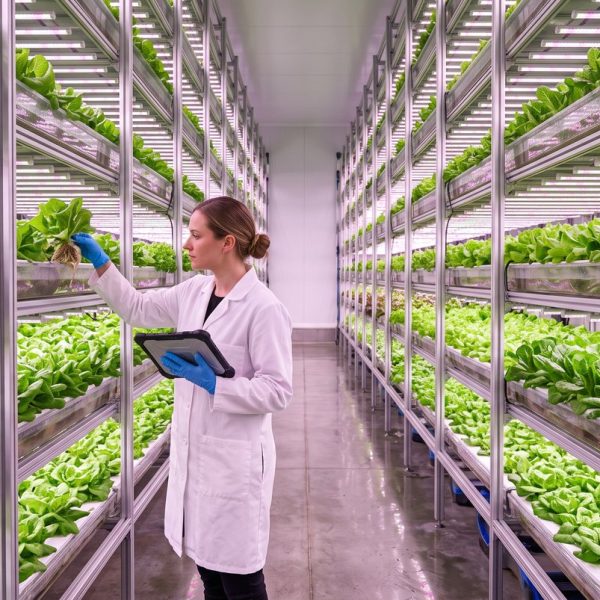
Despite its small size, the Netherlands is one of the largest exporters of agricultural products in the world. Much of this success comes from science. Wageningen University, a leading center for food and life sciences, works on greenhouse efficiency, plant breeding, sustainable farming and food safety.
Techniques developed there help produce more food with less water and land, an important goal as the global population grows.
High tech and industry links
The Netherlands also hosts important technology clusters. Companies and research institutes around Eindhoven work on semiconductors, photonics and advanced materials, and the country is known for equipment used to manufacture the chips that power modern devices.
Close cooperation between universities and industry helps turn lab results into products. Many researchers spend part of their careers in both worlds.
Open science and collaboration
Dutch institutions are strong supporters of open access, meaning research papers and data should be freely available. This approach speeds up discovery and allows scientists everywhere to build on each other's work.
The Dutch Research Council, NWO, funds projects across disciplines and promotes principles such as open publication and societal impact.
An international research community
Dutch universities attract students and scientists from around the world, and many programs are taught in English. This creates a lively, multicultural academic environment where ideas cross borders easily.
Researchers often collaborate with partners in Germany, Belgium and the United Kingdom, and large European programs connect their work to teams on every continent.
Sharing science in many languages
Science works best when findings can be understood by everyone who needs them. Journal articles are often written in English, but patents, regulations, textbooks, safety documents and public outreach materials must frequently be available in other languages. A mistake in a technical term or unit can change the meaning of an entire report.
Universities, institutes and companies that publish or file documents in several markets rely on precise Dutch translation services to move research between Dutch and other languages without losing accuracy. Specialists with scientific training understand the terminology and the conventions of academic writing.
Technology is changing this work too. This article on AI translation and human editing workflows explains how machine output and expert review can work together.
Science news and public understanding
Good science communication matters. Dutch museums, science festivals and media programs bring discoveries to the public, and researchers are encouraged to explain their work in clear language.
Readers can help by checking sources, distinguishing between a single study and settled knowledge, and staying curious about how conclusions are reached.
Challenges for the future
Dutch science also faces questions. Housing for international students is limited, funding must be shared between established fields and new ideas, and researchers worry about workload and job security for early career scientists.
Addressing them will decide whether the country keeps its edge. A system that treats talent well tends to stay creative.
What we can learn
The Dutch example shows that size is not destiny. A culture that values evidence, openness, collaboration and practical problem solving can achieve remarkable results with limited resources.
For students, teachers and curious readers, it is a reminder that science grows wherever people are encouraged to ask questions and share answers.
History, openness and practical thinking explain why a small delta country leads in so many fields of science.